Why Amytis is different.
Better architecture for R&D
Better architecture for R&D
Better architecture for R&D
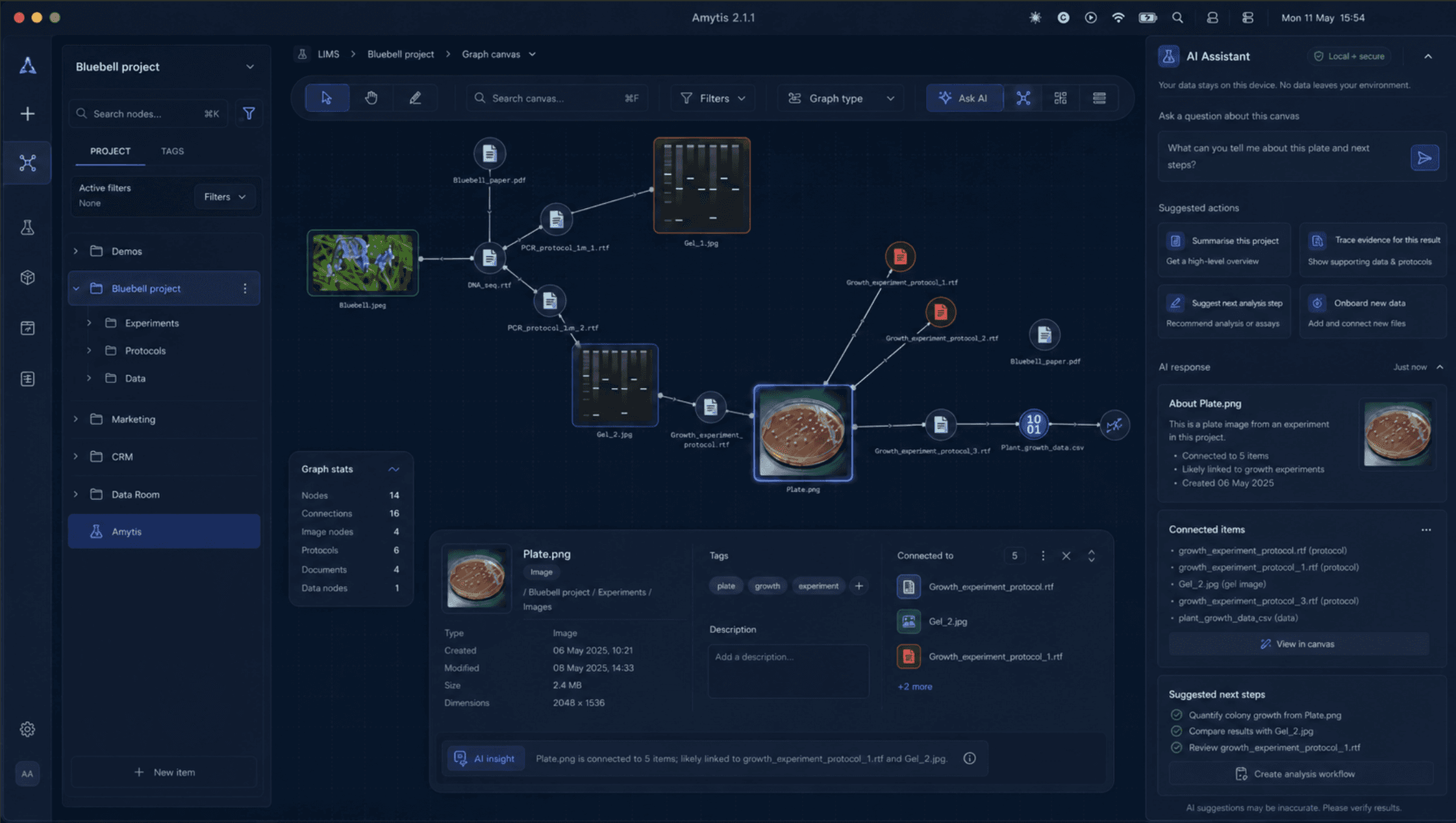
Most R&D software stores your work as isolated records, files and tables. Amytis uses graph technology to map experiments, samples, protocols, data. analyses, results, decisions, and people as connected systems.
Most R&D software stores your work as isolated records, files and tables. Amytis uses graph technology to map experiments, samples, protocols, data. analyses, results, decisions, and people as connected systems.
Most R&D software stores your work as isolated records, files and tables. Amytis uses graph technology to map experiments, samples, protocols, data. analyses, results, decisions, and people as connected systems.
Book a demo

See how Amytis works
The Challenge.
Data siloing is really context loss.
Data siloing is really context loss.
Data siloing is really context loss.
Most R&D tools can store information. The harder problem is keeping the relationships between that information intact.
In R&D, a result only makes sense when it stays connected to the experiment that produced it, the sample that was used, the protocol version that was followed, the data that was analysed and the decision it informed.
When those pieces are siloed across folders, spreadsheets, ELNs, LIMS records, instrument outputs and team conversations, the data may still exist, but the context is lost.
That is where time is lost, handovers break down, experiments are repeated and decisions become harder to trust.
Most R&D tools can store information. The harder problem is keeping the relationships between that information intact.
In R&D, a result only makes sense when it stays connected to the experiment that produced it, the sample that was used, the protocol version that was followed, the data that was analysed and the decision it informed.
When those pieces are siloed across folders, spreadsheets, ELNs, LIMS records, instrument outputs and team conversations, the data may still exist, but the context is lost.
That is where time is lost, handovers break down, experiments are repeated and decisions become harder to trust.
Most R&D tools can store information. The harder problem is keeping the relationships between that information intact.
In R&D, a result only makes sense when it stays connected to the experiment that produced it, the sample that was used, the protocol version that was followed, the data that was analysed and the decision it informed.
When those pieces are siloed across folders, spreadsheets, ELNs, LIMS records, instrument outputs and team conversations, the data may still exist, but the context is lost.
That is where time is lost, handovers break down, experiments are repeated and decisions become harder to trust.
Lost time
Lost time
When R&D context is spread across folders, spreadsheets, ELNs, LIMS records and messages, scientists and managers spend an estimated 25% of their time reconstructing what happened instead of deciding what to do next.
When R&D context is spread across folders, spreadsheets, ELNs, LIMS records and messages, scientists and managers spend an estimated 25% of their time reconstructing what happened instead of deciding what to do next.
When R&D context is spread across folders, spreadsheets, ELNs, LIMS records and messages, scientists and managers spend an estimated 25% of their time reconstructing what happened instead of deciding what to do next.
Lost knowledge
Lost knowledge
When results, protocol versions, sample history, analysis outputs and decisions sit in separate tools, critical knowledge stays in people’s heads, local files and team conversations.
When results, protocol versions, sample history, analysis outputs and decisions sit in separate tools, critical knowledge stays in people’s heads, local files and team conversations.
When results, protocol versions, sample history, analysis outputs and decisions sit in separate tools, critical knowledge stays in people’s heads, local files and team conversations.

Duplicated experiments
Life-sciences sources consistently identify duplicated experiments, redundant analyses and study repeats as consequences of siloed, poorly contextualised scientific data.
Life-sciences sources consistently identify duplicated experiments, redundant analyses and study repeats as consequences of siloed, poorly contextualised scientific data.
Duplicated experiments
Life-sciences sources consistently identify duplicated experiments, redundant analyses and study repeats as consequences of siloed, poorly contextualised scientific data.
The value of R&D is not just in the data. It's in the context connecting it.
The value of R&D is not just in the data. It's in the context connecting it.
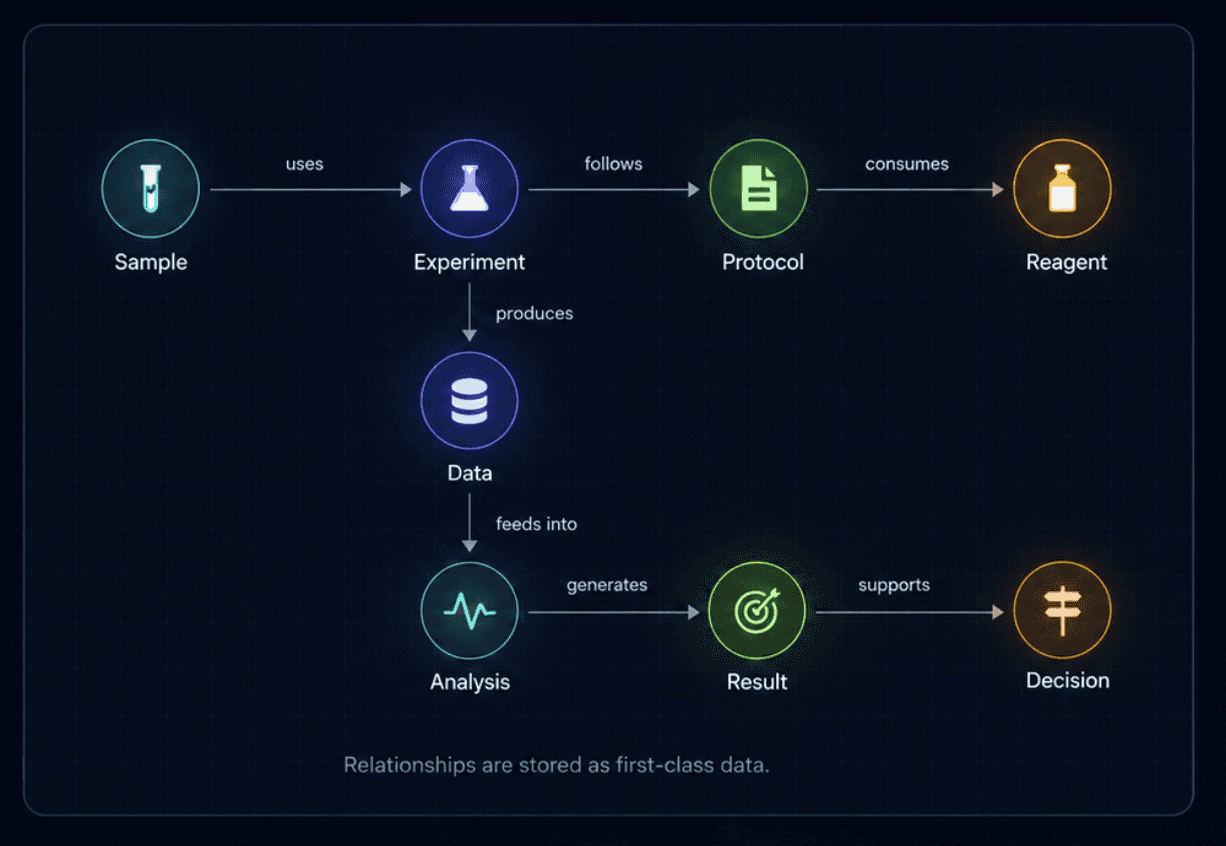
The Architectural Difference.
Amytis is graph native from the ground up.
Amytis is graph native from the ground up.
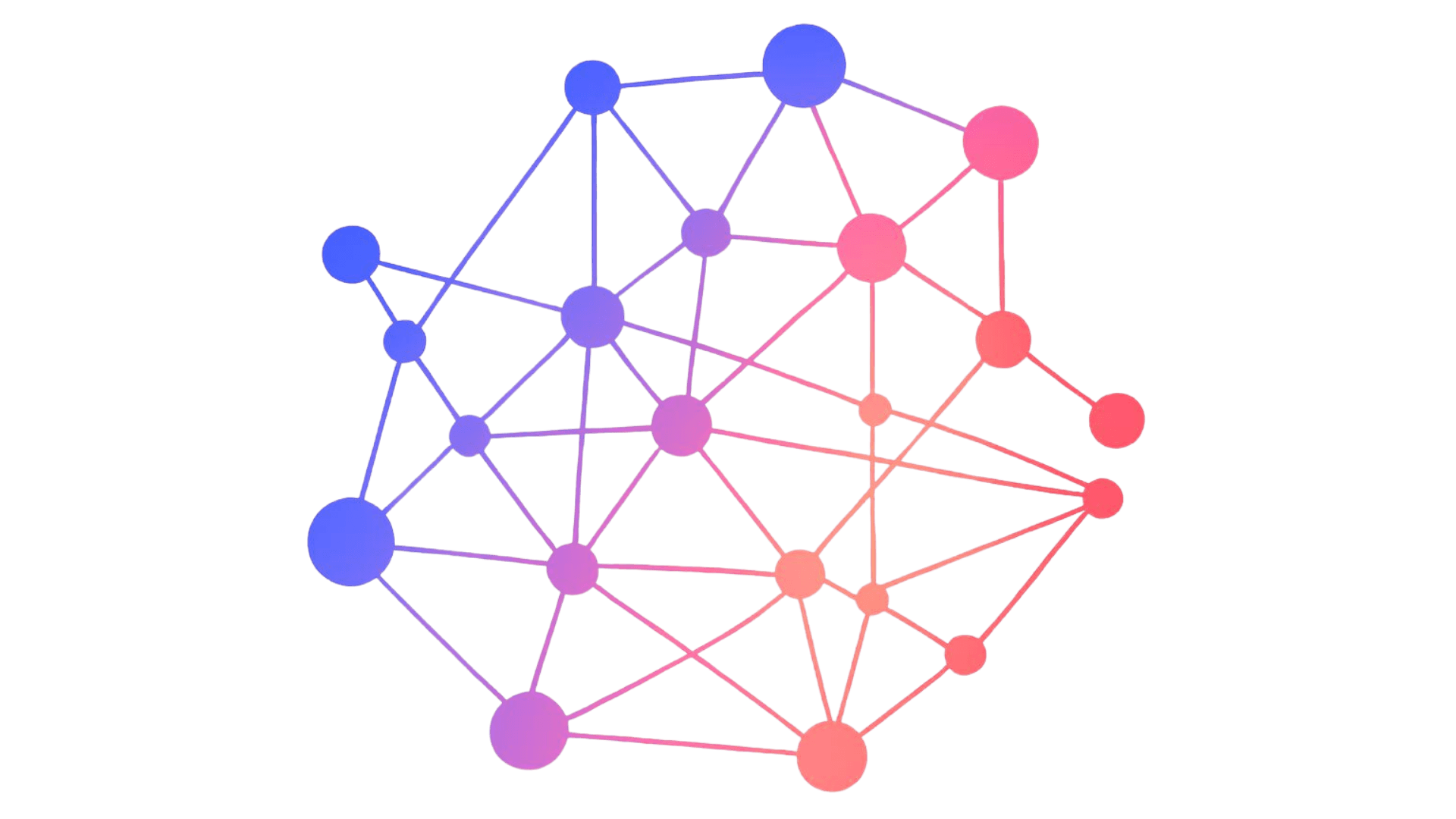
Amytis starts with connections. Every experiment, dataset, protocol, result, decision and person can exist as a node in the project graph.
Amytis starts with connections. Every experiment, dataset, protocol, result, decision and person can exist as a node in the project graph.
Amytis starts with connections. Every experiment, dataset, protocol, result, decision and person can exist as a node in the project graph.
The visual map is not just a pretty interface.
It reflects the underlying data structure.
The visual map is not just a pretty interface.
It reflects the underlying data structure.
The visual map is not just a pretty interface.
It reflects the underlying data structure.
What this unlocks.
What graph architecture makes possible.
What graph architecture makes possible.
Once R&D is structured as a graph, the system can act on the relationships between things. A protocol can consume inventory. A dataset can flow into an analysis workflow. An output can remain linked to the experiment, sample and protocol behind it. That is the point of Amytis: not another place to put research records, but a structure that makes those records useful.
Once R&D is structured as a graph, the system can act on the relationships between things. A protocol can consume inventory. A dataset can flow into an analysis workflow. An output can remain linked to the experiment, sample and protocol behind it. That is the point of Amytis: not another place to put research records, but a structure that makes those records useful.
Once R&D is structured as a graph, the system can act on the relationships between things. A protocol can consume inventory. A dataset can flow into an analysis workflow. An output can remain linked to the experiment, sample and protocol behind it. That is the point of Amytis: not another place to put research records, but a structure that makes those records useful.
Research management
Research management
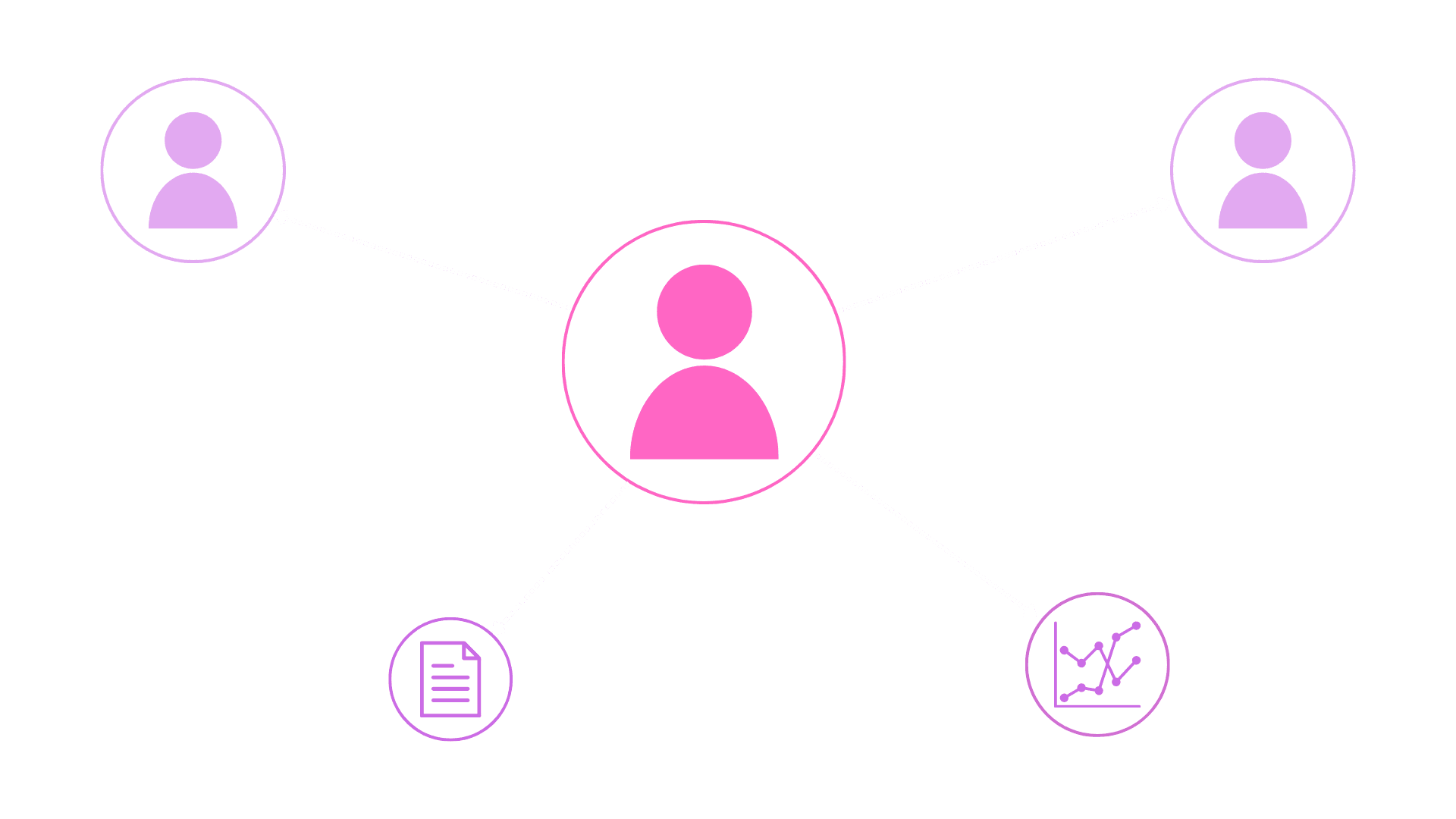
See project progress through the structure of the work itself: experiments run, protocols used, samples generated, analyses completed and decisions made.
See project progress through the structure of the work itself: experiments run, protocols used, samples generated, analyses completed and decisions made.
See project progress through the structure of the work itself: experiments run, protocols used, samples generated, analyses completed and decisions made.
Data management
Data management
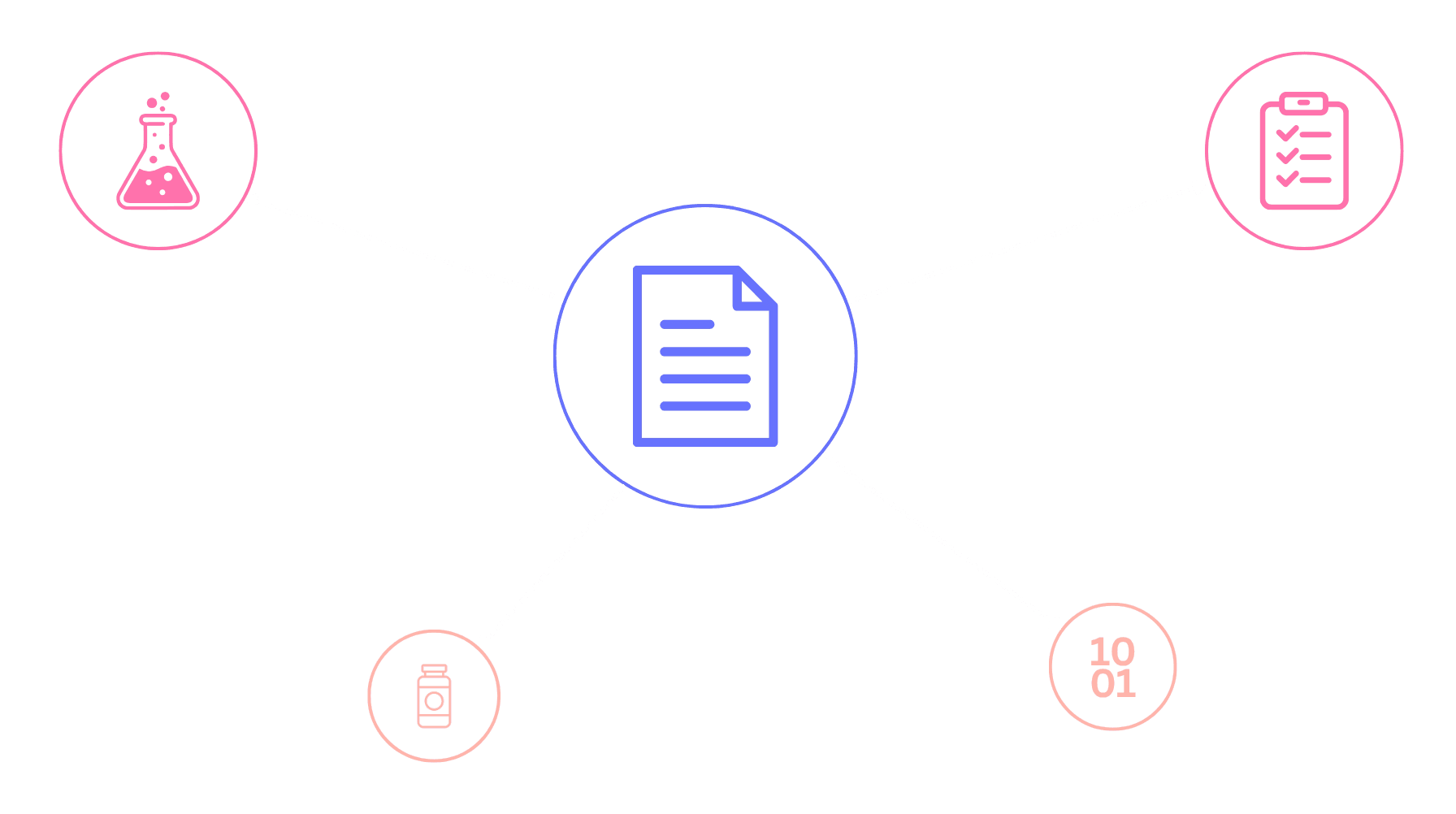
Keep data connected to the sample, protocol, experiment, analysis and result behind it, so your team can find, understand and build on previous work.
Keep data connected to the sample, protocol, experiment, analysis and result behind it, so your team can find, understand and build on previous work.
Keep data connected to the sample, protocol, experiment, analysis and result behind it, so your team can find, understand and build on previous work.
Workflow automation
Workflow automation
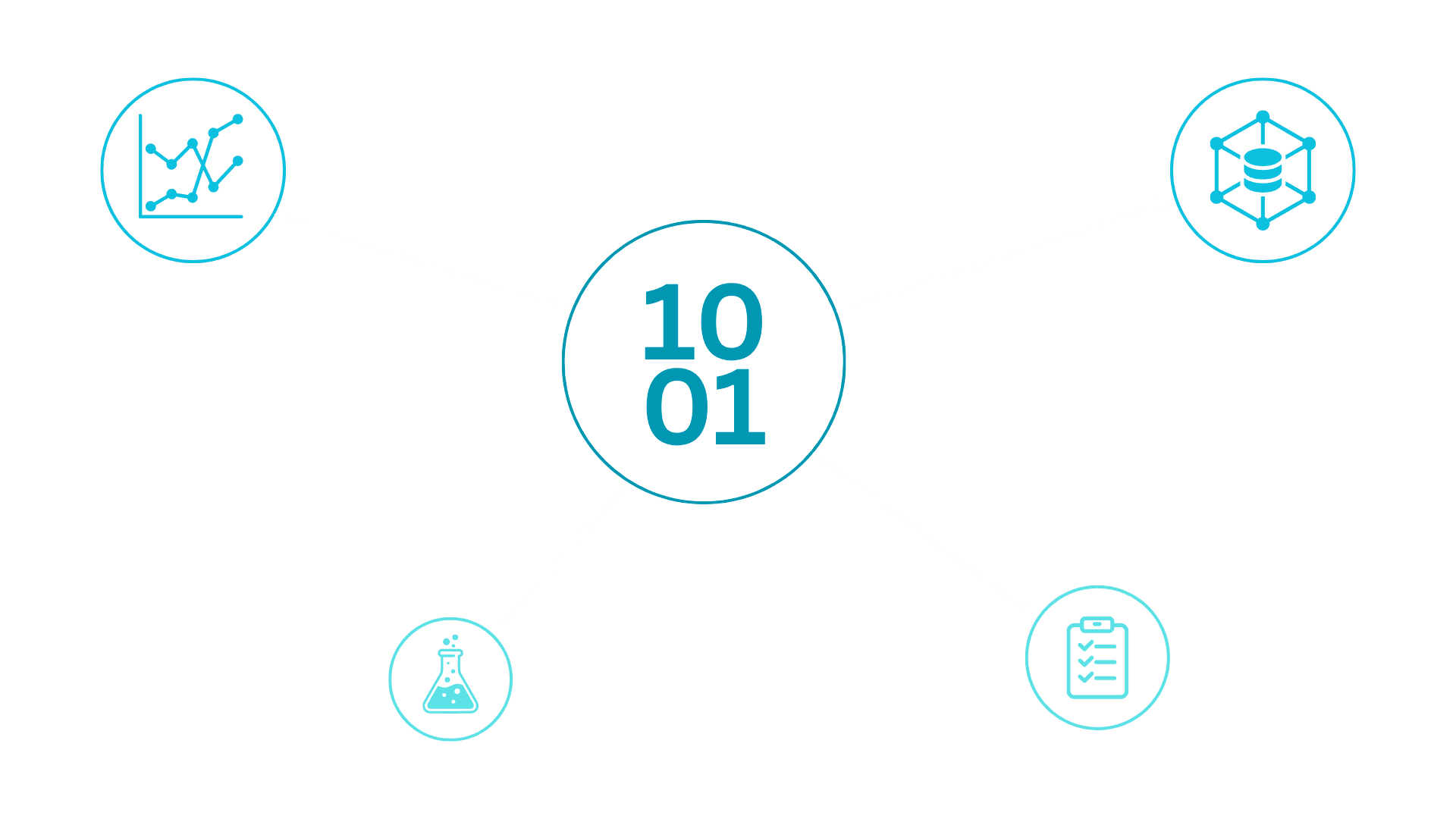
Amytis lets data move through connected workflow nodes, so routine analyses can be automated, repeated and kept linked to the experiment, sample and protocol they belong to.
Amytis lets data move through connected workflow nodes, so routine analyses can be automated, repeated and kept linked to the experiment, sample and protocol they belong to.
Amytis lets data move through connected workflow nodes, so routine analyses can be automated, repeated and kept linked to the experiment, sample and protocol they belong to.
Knowledge sharing
Knowledge sharing
Give teams a shared project map that makes handovers, onboarding and cross-team communication easier.
Give teams a shared project map that makes handovers, onboarding and cross-team communication easier.
Give teams a shared project map that makes handovers, onboarding and cross-team communication easier.
No code modelling
No code modelling
No code modelling
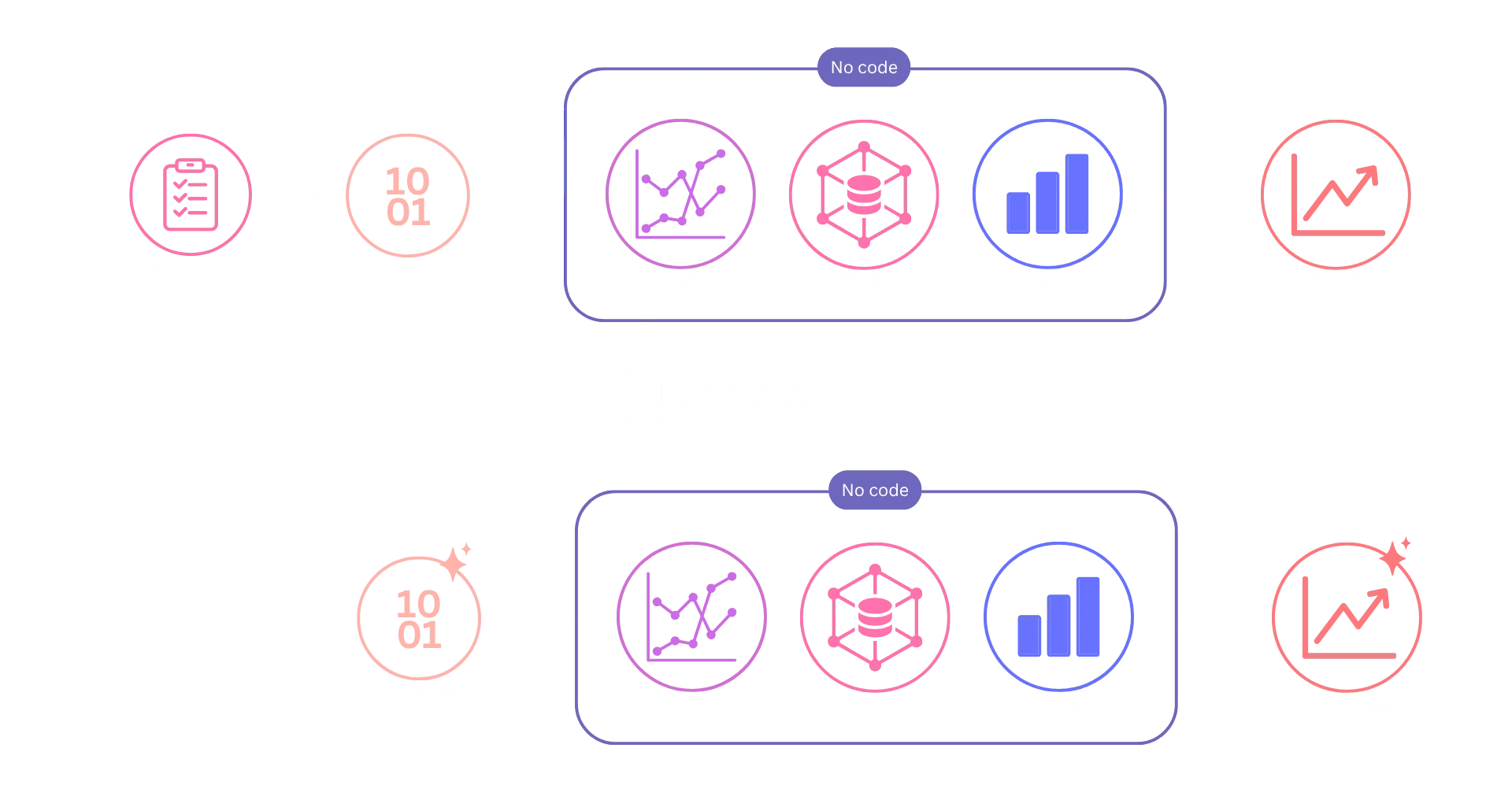
Run advanced anlyses like modelling through functional nodes built into the workflow map.
Run advanced anlyses like modelling through functional nodes built into the workflow map.
Run advanced anlyses like modelling through functional nodes built into the workflow map.
Repeat without rebuilding
Repeat without rebuilding
Repeat without rebuilding
Copy an analysis workflow, replace the input data, and rerun the same process across iterative or similar experiments.
Copy an analysis workflow, replace the input data, and rerun the same process across iterative or similar experiments.
Copy an analysis workflow, replace the input data, and rerun the same process across iterative or similar experiments.
Analyse in context
Analyse in context
Analyse in context
Analysis steps stay connected to the dataset, experiment, sample they belong to.
Analysis steps stay connected to the dataset, experiment, sample they belong to.
Analysis steps stay connected to the dataset, experiment, sample they belong to.
Analysis in context.
Analysis becomes part of the research graph.
Analysis becomes part of the research graph.
In most R&D workflows, analysis happens somewhere else: in spreadsheets, scripts, notebooks or exported files. The output may be saved, but the process that produced it often becomes detached from the experiment.
Amytis brings analysis into the same connected graph as your protocols, samples, data and results.
Functional nodes let users build no-code analysis workflows directly inside the project map. Data can flow from an experiment into an analysis chain, through visualisation, statistics or modelling steps, and out into results that remain linked to their source.
For repeated experiments, users can copy an existing analysis workflow, swap the upstream data node, and rerun the same process while keeping every output connected to the correct part of the project.
In most R&D workflows, analysis happens somewhere else: in spreadsheets, scripts, notebooks or exported files. The output may be saved, but the process that produced it often becomes detached from the experiment.
Amytis brings analysis into the same connected graph as your protocols, samples, data and results.
Functional nodes let users build no-code analysis workflows directly inside the project map. Data can flow from an experiment into an analysis chain, through visualisation, statistics or modelling steps, and out into results that remain linked to their source.
For repeated experiments, users can copy an existing analysis workflow, swap the upstream data node, and rerun the same process while keeping every output connected to the correct part of the project.
In most R&D workflows, analysis happens somewhere else: in spreadsheets, scripts, notebooks or exported files. The output may be saved, but the process that produced it often becomes detached from the experiment.
Amytis brings analysis into the same connected graph as your protocols, samples, data and results.
Functional nodes let users build no-code analysis workflows directly inside the project map. Data can flow from an experiment into an analysis chain, through visualisation, statistics or modelling steps, and out into results that remain linked to their source.
For repeated experiments, users can copy an existing analysis workflow, swap the upstream data node, and rerun the same process while keeping every output connected to the correct part of the project.
In development
In development
Easy team collaboration.
Collaboration around the work itself.
Collaboration around the work itself.
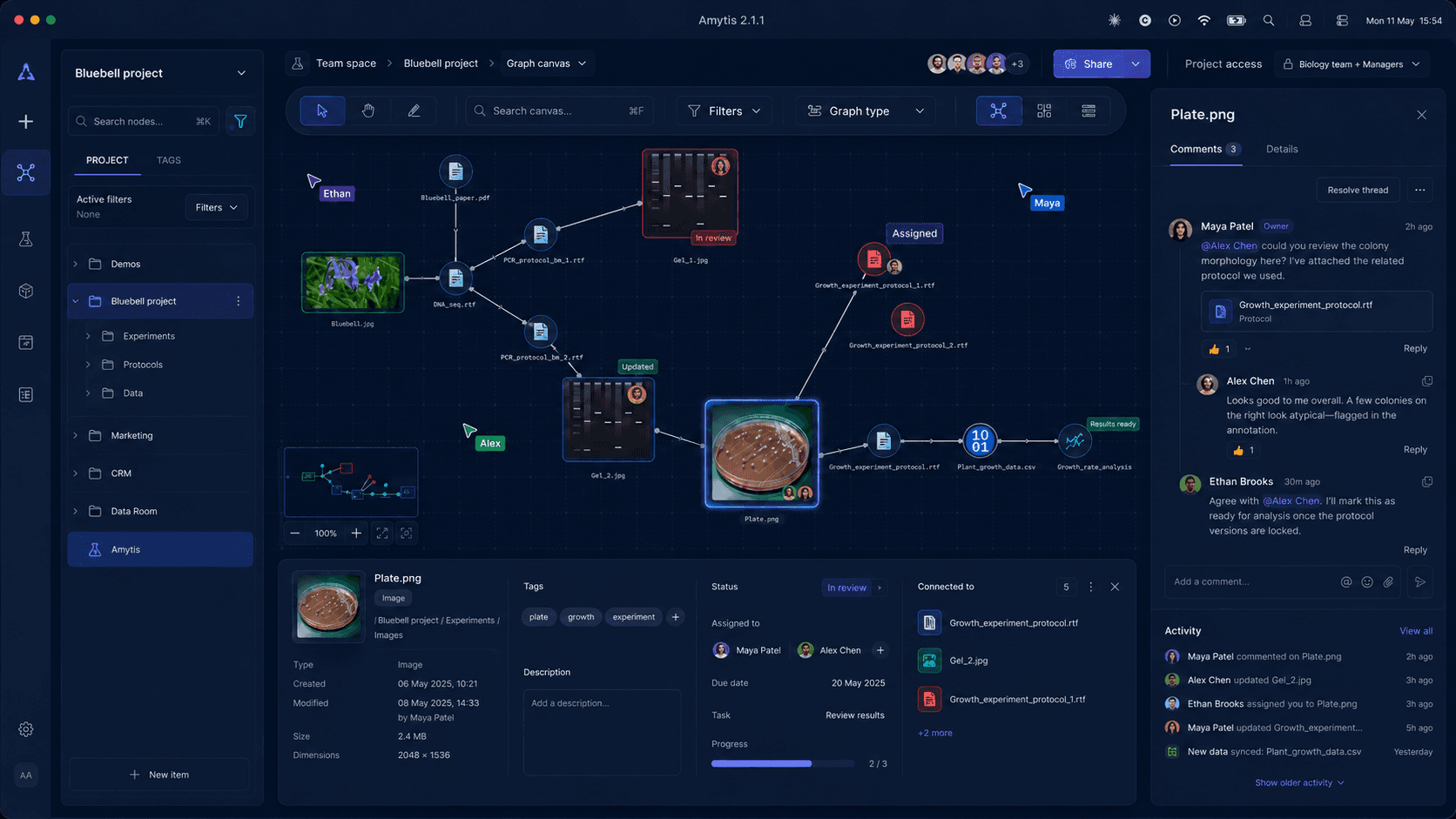
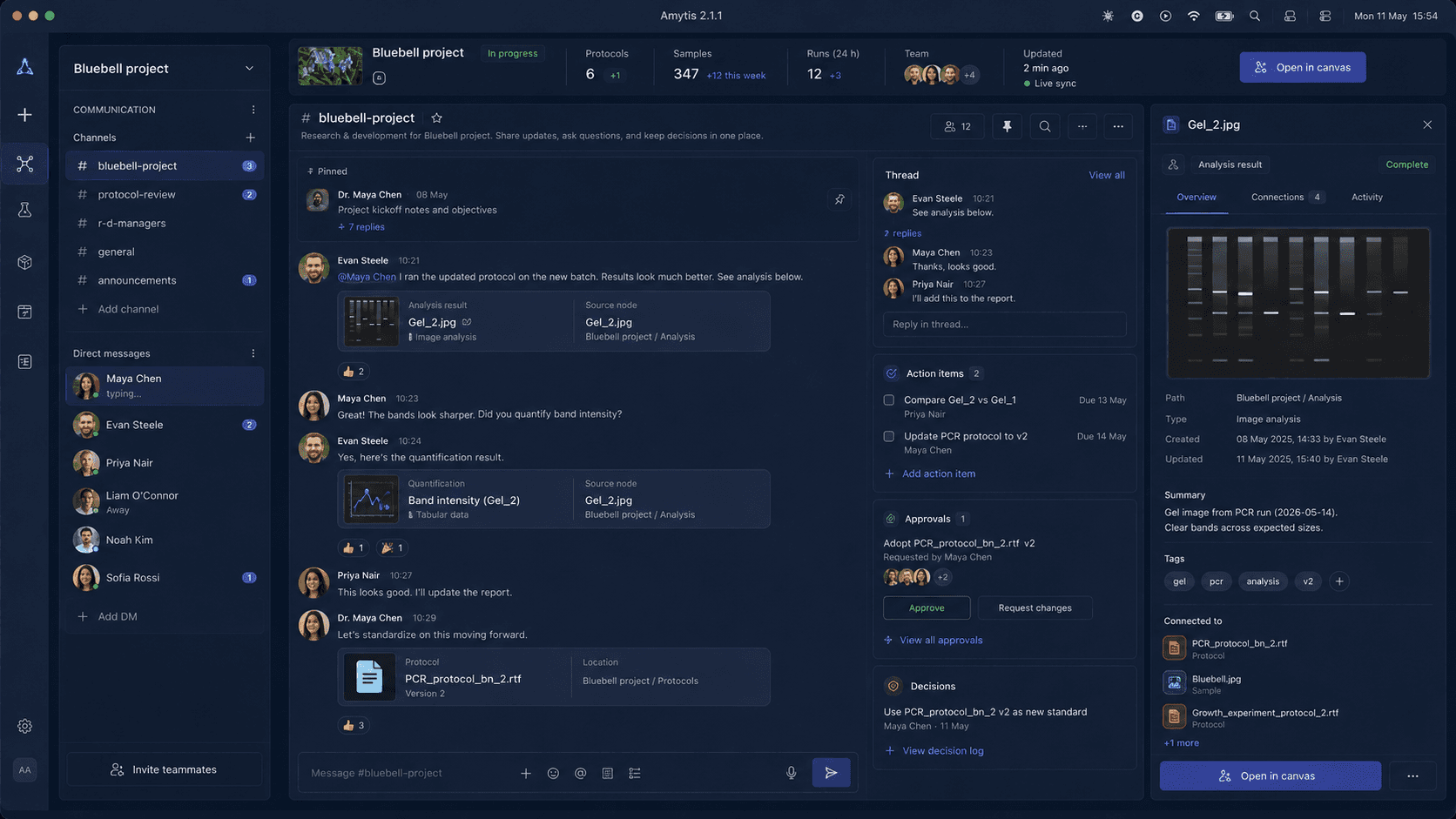
R&D collaboration should not be separated from the work being discussed. When conversations happen in messages, updates live in spreadsheets, and decisions sit in meeting notes, context fragments again.
Amytis is being developed towards shared project maps where teams can discuss, assign, review and make decisions around the actual experiments, samples, protocols, data and results in the graph.
This means a comment can live on the node it refers to. A decision can stay linked to the evidence behind it. A researcher can be assigned to a project, protocol or analysis with the right access permissions. The project map becomes a live shared view of R&D progress.
Planned collaboration features shown here are concept previews and may evolve through development.
R&D collaboration should not be separated from the work being discussed. When conversations happen in messages, updates live in spreadsheets, and decisions sit in meeting notes, context fragments again.
Amytis is being developed towards shared project maps where teams can discuss, assign, review and make decisions around the actual experiments, samples, protocols, data and results in the graph.
This means a comment can live on the node it refers to. A decision can stay linked to the evidence behind it. A researcher can be assigned to a project, protocol or analysis with the right access permissions. The project map becomes a live shared view of R&D progress.
Planned collaboration features shown here are concept previews and may evolve through development.
R&D collaboration should not be separated from the work being discussed. When conversations happen in messages, updates live in spreadsheets, and decisions sit in meeting notes, context fragments again.
Amytis is being developed towards shared project maps where teams can discuss, assign, review and make decisions around the actual experiments, samples, protocols, data and results in the graph.
This means a comment can live on the node it refers to. A decision can stay linked to the evidence behind it. A researcher can be assigned to a project, protocol or analysis with the right access permissions. The project map becomes a live shared view of R&D progress.
Planned collaboration features shown here are concept previews and may evolve through development.
Help shape our team features.
Register interest for a pilot project with us.
Help shape our team features.
Register interest for a pilot project with us.
Help shape our team features.
Register interest for a pilot project with us.
Live shared project maps
Live shared project maps
Give teams a real-time view of project structure, progress and recent activity.
Give teams a real-time view of project structure, progress and recent activity.

Node-level discussion
Node-level discussion
Keep comments and threads attached to the sample, protocol, dataset or result being discussed.
Keep comments and threads attached to the sample, protocol, dataset or result being discussed.
Roles and permissions
Assign researchers to projects and control who can view, edit or share specific workspaces.
Roles and permissions
Assign researchers to projects and control who can view, edit or share specific workspaces.
In development
AI Intelligence
AI over files has limits. AI over a research graph is different.
AI over files has limits. AI over a research graph is different.
Many R&D platforms are adding AI on top of existing files, documents and records. That can be useful for search, summaries and drafting, but it still leaves AI trying to infer context from disconnected information.
Amytis is being built for a different kind of AI: a local research assistant grounded in the structure of your R&D graph.
Because experiments, samples, protocols, data, analyses, results, decisions and people are explicitly connected, future AI in Amytis can use those relationships as context. It can help trace evidence, navigate project history, suggest analysis workflows and support decisions from connected research structure, not isolated files.
Better context creates more useful AI.
Concept preview: local AI features are in development and will be introduced progressively through pilot partnerships.
Many R&D platforms are adding AI on top of existing files, documents and records. That can be useful for search, summaries and drafting, but it still leaves AI trying to infer context from disconnected information.
Amytis is being built for a different kind of AI: a local research assistant grounded in the structure of your R&D graph.
Because experiments, samples, protocols, data, analyses, results, decisions and people are explicitly connected, future AI in Amytis can use those relationships as context. It can help trace evidence, navigate project history, suggest analysis workflows and support decisions from connected research structure, not isolated files.
Better context creates more useful AI.
Concept preview: local AI features are in development and will be introduced progressively through pilot partnerships.
Many R&D platforms are adding AI on top of existing files, documents and records. That can be useful for search, summaries and drafting, but it still leaves AI trying to infer context from disconnected information.
Amytis is being built for a different kind of AI: a local research assistant grounded in the structure of your R&D graph.
Because experiments, samples, protocols, data, analyses, results, decisions and people are explicitly connected, future AI in Amytis can use those relationships as context. It can help trace evidence, navigate project history, suggest analysis workflows and support decisions from connected research structure, not isolated files.
Better context creates more useful AI.
Concept preview: local AI features are in development and will be introduced progressively through pilot partnerships.
Help shape our AI features.
Register interest for a pilot project with us.
Help shape our AI features.
Register interest for a pilot project.
Help shape our AI features.
Register interest for a pilot project with us.
Graphify existing projects
Graphify existing projects
Use AI to help turn existing files, protocols, datasets and notes into structured project maps, so teams can onboard into Amytis faster.
Use AI to help turn existing files, protocols, datasets and notes into structured project maps, so teams can onboard into Amytis faster.
Use AI to help turn existing files, protocols, datasets and notes into structured project maps, so teams can onboard into Amytis faster.
Navigate large maps
Navigate large maps
Ask how samples, protocols, datasets and results connect across multiple projects.
Ask how samples, protocols, datasets and results connect across multiple projects.
Ask how samples, protocols, datasets and results connect across multiple projects.

Suggest next analyses
Suggest next analyses
Use project context to recommend useful analysis workflows, comparisons or modelling steps.
Use project context to recommend useful analysis workflows, comparisons or modelling steps.
Use project context to recommend useful analysis workflows, comparisons or modelling steps.
Support decisions
Support decisions
Help teams identify evidence, gaps and next actions before committing to a research direction.
Help teams identify evidence, gaps and next actions before committing to a research direction.
Help teams identify evidence, gaps and next actions before committing to a research direction.
Pilot project
Where we are now.
Built honestly. Moving quickly.
Built honestly. Moving quickly.
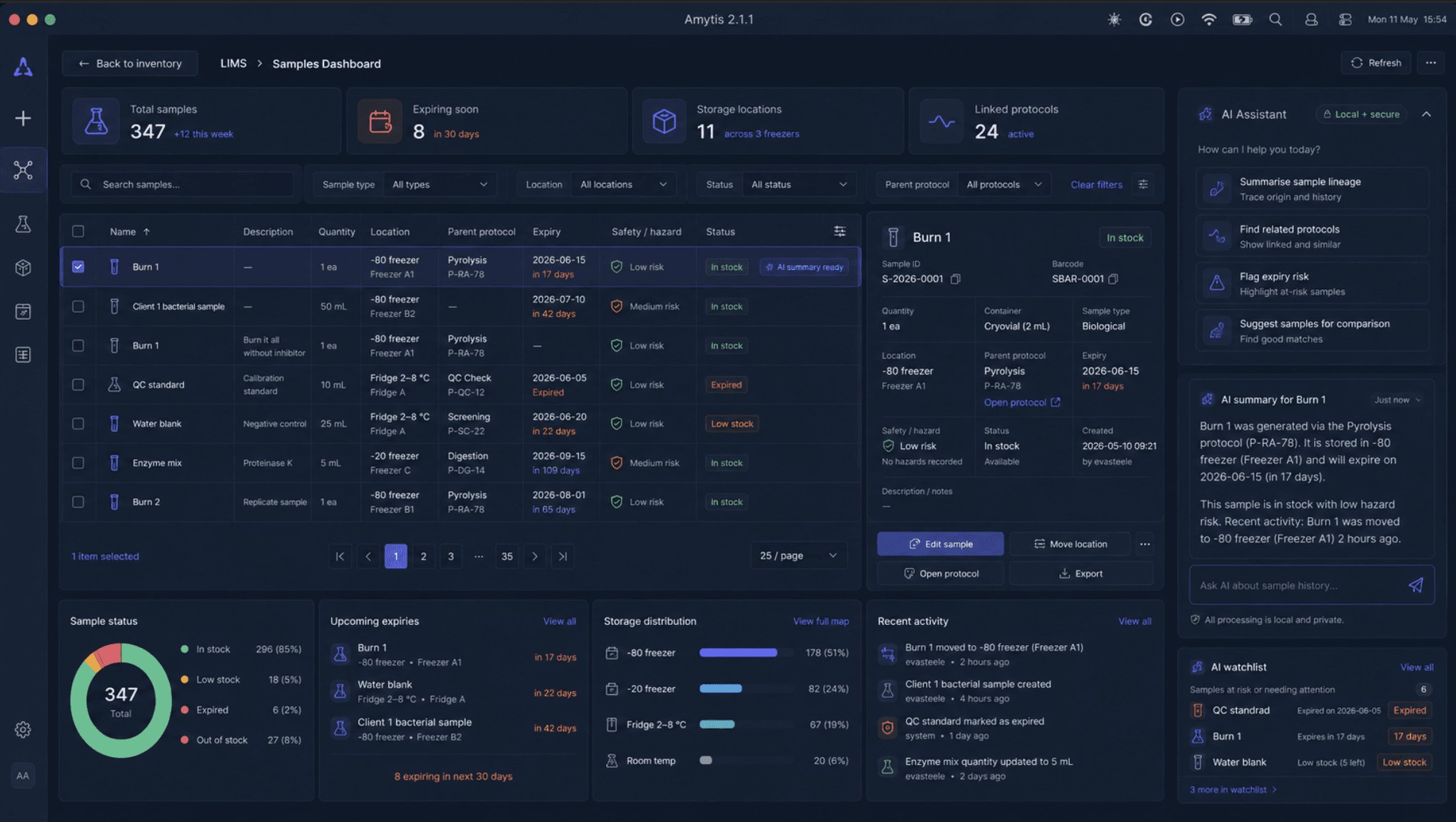
Amytis is in active development. Today, the platform demonstrates the core graph workspace, protocol nodes, LIMS foundations and no-code analysis workflows.
Next, we are building the collaboration and local AI layers through pilot partnerships with biotech teams who want a better way to manage R&D.
If your team is outgrowing folders, spreadsheets and disconnected tools, we would like to understand your workflow and explore whether Amytis could support your R&D operations.
Amytis is in active development. Today, the platform demonstrates the core graph workspace, protocol nodes, LIMS foundations and no-code analysis workflows.
Next, we are building the collaboration and local AI layers through pilot partnerships with biotech teams who want a better way to manage R&D.
If your team is outgrowing folders, spreadsheets and disconnected tools, we would like to understand your workflow and explore whether Amytis could support your R&D operations.
Amytis is in active development. Today, the platform demonstrates the core graph workspace, protocol nodes, LIMS foundations and no-code analysis workflows.
Next, we are building the collaboration and local AI layers through pilot partnerships with biotech teams who want a better way to manage R&D.
If your team is outgrowing folders, spreadsheets and disconnected tools, we would like to understand your workflow and explore whether Amytis could support your R&D operations.