Will AI replace scientists? We asked biotech founders and scientists how AI is changing drug discovery, diagnostics and scientific research.

Nikita Lazaroo
Growth & Commercial Lead
Will AI actually replace scientists?
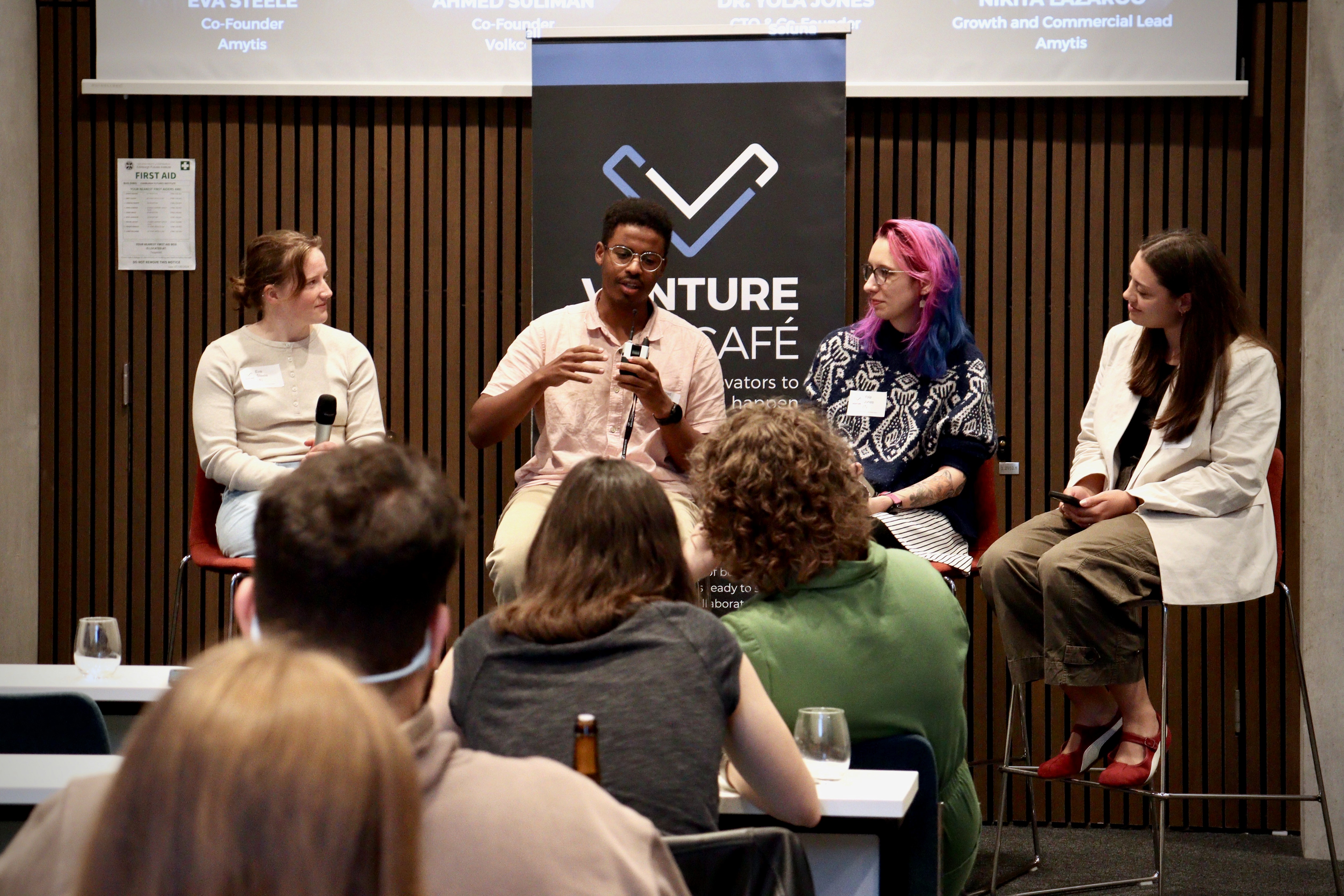
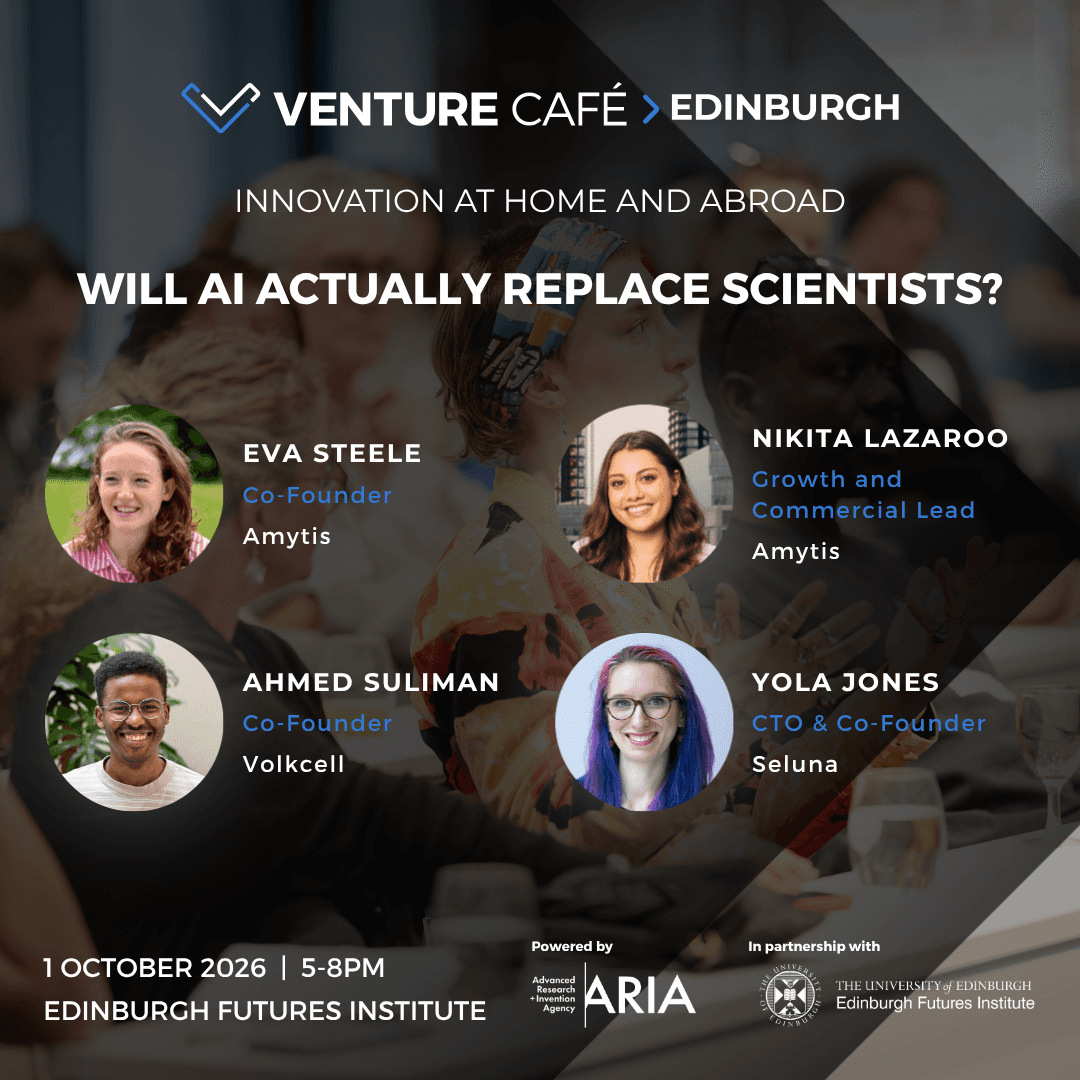
Last week I sat down with a panel of biotech founders to discuss a question that is on so many people’s minds, just addressing it felt like we were verging on clickbait: will AI replace ____? You can fill the blank in with almost anything, but in our case we were debating whether or not AI could and would replace scientists.
As always, the answer is not clear-cut. While there are so many exciting and net positive applications for AI and machine learning in science, there are equally a couple of red flags and challenges to grapple with.
What are the most exciting applications for AI life sciences and medicine?
Science is inherently about understanding the world we live in. In life science and medicine in particular much of our curiosity surrounds processes that can improve human lives. So unsurprisingly, our panel was most excited about how much AI/ML is supporting clinical diagnostics and drug discovery.
Yola spoke about how they are using AI at Seluna to rapidly analyse huge amounts of raw neurological data and provide diagnostic insights that would otherwise take a clinical team hours to work through. In practice, that could mean faster diagnosis and treatment for patients, while freeing up clinicians to spend more time doing the things that actually require a human.
Drug discovery is one of the most talked-about applications of AI in biotech. AI can help researchers predict protein structures, model molecular interactions and prioritise which compounds or biological targets are worth investigating experimentally.
Ahmed also pointed out how during experimentation, AI can be used to help scientists rapidly analyse results. For example, many scientists manually spend hours in the lab taking and recording measurements which aside from being time consuming, is subject to human error. At Volkcell, he’s using AI to read microscopic images and take these measurements for you.
The exciting bit isn’t that AI is ‘doing science’, it’s that it’s making it easier and faster to make progress in the areas that matter most - more on that later.
Why aren’t more scientists using AI?
At this point, the panel was painting a pretty positive picture of AI in science. So - why doesn’t everyone use it?
The UK Government published an AI Adoption Plan: Life Sciences earlier in the year which cited everything from data availability and compute resources to public trust and skills as potential barriers to widespread adoption of AI in life sciences.
The panel agreed that data was a big barrier: in the healthcare space, not only is data fragmented across systems and often in need of cleansing, we are likely missing crucial data based on health inequalities.
If a particular demographic is less likely to seek healthcare, for example, then our existing datasets are less likely to contain information about people from that demographic.
If this dataset was then used in an AI/ML model, there’s a risk that the output is not representative which could lead to poor patient outcomes and a lapse in public trust.
Eva also called out that while data may be available, often it is not appropriate for sensitive data to be fed into frontier models. Pharmaceutical companies, biotechs, academics and healthcare providers all have access to highly sensitive, private data which they either cannot share with cloud model providers because of data protection regulations or which they don’t want to share for fear of losing sensitive IP.
Two recent discoveries claimed by frontier labs - OpenAI’s Navier Stokes solution and Anthropic's novel enzyme system - have been under heavy debate from the scientific community. If academic researchers had already shared information about these topics with ChatGPT or Claude, does it really count as a novel discovery?
There’s not an easy answer to that question, but it does highlight the need for trust and transparency in any scientific AI model or tool. At Amytis, we’re firm believers that scientists and clinicians should be in control of when and how AI is used in their work. They should have access to sovereign, local models and be confident that their work remains their own.
What are some ‘red flags’ to look out for in the headlines?
By this point in the discussion, we had already called out some of the big AI-in-science headlines that have appeared recently. As a panel of scientists, it’s fair to say that these headlines caused everyone to nerd out a little bit.
But there were also a couple of red flags the panel were keen to call out.
Discoveries without detail. Scientists love to talk about their research. Be wary of a headline or press release that lacks detail or which purposefully obscures what methods were used to reach the discovery. An exception to this might be a pharmaceutical company that needs to protect IP, but in general, even these announcements will include some technical detail.
Bold, definitive claims. Science is a process - nothing is discovered overnight. Scientific discoveries build on one another and, in general, scientists are good at referencing and acknowledging the scientists who came before them. Any claims of a new discovery that don’t reference all the other discoveries that led up to it are likely just looking for clout.
So, will AI actually replace scientists?
We did manage to reach a consensus on this one: no.
Scientists, as humans, have the unique ability to experience the world around them. This experience gives them insight into what’s important - what should be studied next? What treatment or intervention will make the most difference? What are the people around me struggling with, that I could help address?
Scientists are also creative. They use this creativity to solve problems, design experiments and communicate their work in ways that make other people care about it.
AI can help with all of these things, it can make researchers faster and give them access to new capabilities but ultimately AI is trained on retrospective data. It lacks an emotional, creative element. Scientists will continue to work and create far into the future.
As Yola put it: “You can pry the pipette out of my cold, dead hands”.
Get started